Understanding how to move between the US customary system and the international metric system is a practical math skill. A scale factor worksheet for converting imperial to metric units gives students and professionals a structured way to practice these calculations. Instead of just memorizing numbers, using a scale factor helps you see the proportional relationship between measurements like inches and centimeters or pounds and kilograms. This builds a stronger foundation for real-world problem solving.
What exactly is a scale factor in unit conversion?
A scale factor is simply a ratio that compares two different measurements. When you convert imperial to metric, you are multiplying the original number by a specific fraction or decimal. For example, one inch equals exactly 2.54 centimeters. The scale factor here is 2.54. Worksheets use these ratios to help you practice setting up the multiplication step so you do not have to guess which mathematical operation to use.
When do you actually need to convert between these measurement systems?
You run into this math problem constantly in everyday life and specific careers. If you are reading a foreign recipe, you might need to switch ounces to grams, which is a common scenario when practicing with a scale factor worksheet for converting units in cooking recipes. Travelers need to understand kilometers versus miles, and you can build those skills by working through a worksheet focused on maps and distances. Engineers and builders also rely on accurate translations between feet and meters when reading international blueprints.
How do you set up the conversion ratio correctly?
The most reliable way to solve these problems is by using dimensional analysis, also known as the factor-label method. You write your starting value as a fraction over one. Then, you multiply it by your scale factor, placing the unit you want to get rid of on the bottom and the unit you want to keep on the top.
Let us say you need to convert 10 inches to centimeters.
- Write 10 inches / 1.
- Multiply by the scale factor: 2.54 centimeters / 1 inch.
- The inches cancel out, leaving you with 10 x 2.54 centimeters.
- The final answer is 25.4 centimeters.
Writing it out this way prevents you from accidentally dividing when you should be multiplying.
What are the most common mistakes to avoid on these worksheets?
People often rush through the setup and make preventable errors. Here are a few things to watch out for:
- Flipping the scale factor: If you put the wrong unit in the denominator, your units will not cancel out. Always check that the starting unit is on the bottom of your conversion fraction.
- Mixing up mass and volume: Ounces can measure both weight and liquid volume. Make sure your worksheet specifies fluid ounces versus standard ounces before picking your scale factor.
- Ignoring prefixes: Converting to meters is different from converting to millimeters. Pay close attention to whether the metric target unit has a prefix like kilo-, centi-, or milli-.
If you are working on building plans, a small decimal error can ruin a project, which is why practicing with an architectural unit conversions worksheet is so helpful for catching these mistakes early.
How can you check if your converted answer makes sense?
Always do a quick mental estimate before finalizing your answer. The metric system is based on powers of ten, while the imperial system uses irregular numbers like 12, 3, and 5280. Because a centimeter is smaller than an inch, your final metric number for length should be larger than your starting imperial number. If you convert 5 inches and get 1.96 centimeters, you know you divided instead of multiplied. For official conversion constants, you can always verify your scale factors against the National Institute of Standards and Technology reference guide.
What should you check before finishing your worksheet?
Before you hand in your assignment or apply your calculations to a real project, run through this quick checklist to ensure accuracy:
- Identify the starting unit and the target unit.
- Verify the exact scale factor for those specific units.
- Set up the fraction so the starting units cancel out completely.
- Multiply across the numerators and divide by the denominators.
- Do a mental sanity check to ensure the final number is reasonably larger or smaller than the original value.
 Mastering Architectural Unit Conversions with Scale Factor Worksheets
 Understanding Scale Factor in Maps and Distance Calculations
 Mastering Recipe Conversions with Scale Factors
 Converting Currency Using Scale Factor in Unit Conversion Problems
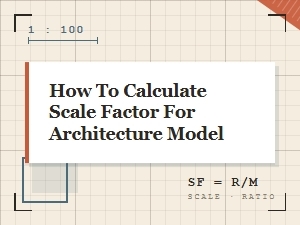 Calculating Scale Factors for Architectural Models
 Applying Scale Factors for Spacecraft Replica Dimensions