Reading a blueprint requires more than just looking at lines; it requires translating small measurements on paper into large, real-world dimensions. A scale factor worksheet for architectural unit conversions helps students, drafters, and DIY renovators practice this exact math. When you miscalculate a scale, a custom cabinet might not fit, or a foundation could be poured inches off the property line. Practicing with structured worksheets builds the muscle memory needed to switch between drawing units and physical units without making costly errors.
How do you calculate architectural scale factors?
An architectural scale factor is the ratio between the measurement on the drawing and the actual physical measurement. If a floor plan uses a scale where 1/4 inch equals 1 foot, you first need to make the units match. Since 1 foot is 12 inches, the ratio becomes 1/4 inch to 12 inches. To find the scale factor, you divide the real-world measurement by the drawing measurement. In this case, 12 divided by 1/4 gives you a scale factor of 48. This means the real building is 48 times larger than the drawing.
Working through a focused practice set on basic architectural conversions helps solidify this ratio math before you move on to complex floor plans.
When do you need to convert units on a blueprint?
You run into unit conversions constantly in architectural drafting. The most common scenario is when the drawing is in inches but the physical materials are sold in feet or meters. For example, if a scaled wall measures 3.5 inches on paper and the scale factor is 48, the real wall is 168 inches. You then have to convert those 168 inches into 14 feet to order the correct amount of drywall.
International projects add another layer of complexity, requiring you to practice switching between imperial and metric measurements to ensure the structural plans align with local building codes.
What are the most common mistakes when scaling drawings?
- Forgetting to match units before finding the ratio. Comparing inches directly to feet without converting one of them will give you a completely wrong scale factor.
- Multiplying instead of dividing. If you are scaling down from a real-world measurement to a drawing measurement, you must divide by the scale factor, not multiply.
- Misreading the architect scale ruler. Relying purely on a physical scale ruler without doing the math can lead to errors if the blueprint was resized or printed on the wrong paper size.
How can math teachers use these worksheets in the classroom?
Teachers use architectural scaling to show students how ratios apply outside the textbook. Instead of abstract numbers, students measure classroom furniture or design a dream bedroom. It is a highly effective way to introduce proportional reasoning. While architecture focuses on physical space, the underlying math of proportional relationships applies to other fields too, which is why some educators pair these lessons with exercises like calculating proportional currency exchange rates to show how ratios govern both physical space and financial value.
For official guidelines on measurement standards and conversion accuracy, you can review the National Institute of Standards and Technology metric conversion resources.
What should your next practice steps be?
Before you start your next drafting project or hand in your math assignment, follow this practical checklist to ensure your measurements are accurate:
- Identify the stated scale on the title block of your blueprint or worksheet.
- Write down the scale as a fraction and convert both sides to the exact same unit, such as all inches or all centimeters.
- Calculate the unitless scale factor by dividing the real-world side by the drawing side.
- Measure a line on the drawing and multiply it by your scale factor to find the real dimension.
- Convert that final real-world dimension into the specific unit required for your material takeoff or final answer.
 Master the Imperial to Metric Conversion Scale Factor
 Understanding Scale Factor in Maps and Distance Calculations
 Mastering Recipe Conversions with Scale Factors
 Converting Currency Using Scale Factor in Unit Conversion Problems
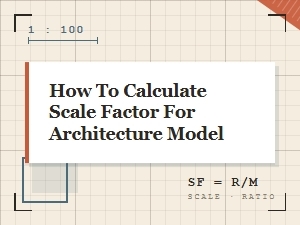 Calculating Scale Factors for Architectural Models
 Applying Scale Factors for Spacecraft Replica Dimensions