Reading a map requires more than just following lines; it requires understanding how a small measurement on paper translates to miles or kilometers in the real world. A scale factor worksheet using maps and distances helps students build this exact skill. By working through these problems, learners practice proportional reasoning and figure out how to convert map measurements into actual travel distances. This foundational math skill is essential for geography, urban planning, and everyday navigation.
How do you calculate real-world distance from a map?
To find the actual distance between two locations, you first need to know the map scale. The scale acts as a ratio, telling you how many real-world units equal one unit on the paper. For example, if a map states that 1 inch equals 50 miles, the scale factor is 1:50.
If you measure a route on the map and it is 3.5 inches long, you multiply that measurement by the scale factor. In this case, 3.5 inches times 50 miles gives you a real-world distance of 175 miles. Worksheets focused on this topic usually provide the map scale and a measured distance, asking the student to solve for the missing actual distance using cross-multiplication or simple multiplication.
What is the difference between a scale factor and a unit rate?
Students often confuse these two terms because they both involve ratios. A unit rate compares two different units where the second quantity is one, like 50 miles per 1 inch. A scale factor is a multiplier used to scale a figure up or down. When working with map distances, you are essentially using the unit rate as your scale factor to find the real-world measurement.
Practicing these ratios on paper prepares students for other types of proportional math. For instance, the same logical steps apply when working through a worksheet focused on currency exchange rates, where you convert dollars to euros using a set ratio. The underlying math remains the same, even if the context changes.
How do you handle different units of measurement on a map?
One of the most common challenges in map scale problems is mismatched units. A map might give a scale in centimeters to kilometers, but ask for the final answer in meters. Before applying the scale factor, students must ensure their units align.
If a student needs to convert the final answer from kilometers to meters, they multiply by 1,000. This requires a solid grasp of basic metric conversions. It is very similar to the process used when adjusting measurements for a recipe conversion exercise, where you might need to change cups to fluid ounces before scaling the ingredients.
Why do students make mistakes with map scale problems?
When grading these worksheets, teachers usually see the same few errors. Recognizing them helps you correct your approach before a test.
- Dividing instead of multiplying: If the scale is 1 inch = 10 miles, and the map distance is 4 inches, some students divide 10 by 4 instead of multiplying 4 by 10. Always ask if the real-world distance should be larger or smaller than the map distance.
- Ignoring the ruler's zero mark: When physically measuring a map with a ruler, students sometimes start at the edge of the ruler rather than the actual zero line, throwing off the initial measurement.
- Forgetting to convert units: If the question asks for the answer in feet, but the scale provides miles, students often forget the final conversion step.
Avoiding these errors requires slowing down and writing out the ratio clearly before doing any mental math. Setting up the proportion visually on the paper keeps the numbers organized.
How does map scaling relate to architectural drawings?
The exact same principles used for reading a road map apply to reading a floor plan. Architects and builders use scale drawings to represent large structures on standard paper. According to the National Council of Teachers of Mathematics, understanding scale drawings is a key middle school geometry standard because it bridges abstract ratios with physical spaces.
If a student masters map distances, they can easily transition to reading blueprints. You can find more practice with this specific application in an exercise covering architectural unit conversions, which uses the same proportional reasoning to figure out room dimensions from a scaled floor plan.
Steps to solve your next map scale worksheet
Before turning in your assignment, run through this quick checklist to ensure your answers are accurate:
- Identify the map scale and write it as a fraction or ratio (e.g., 1 cm / 5 km).
- Measure the distance on the map carefully, starting exactly at the zero mark of your ruler.
- Set up your proportion: Map Distance / Real Distance = Scale.
- Solve for the missing variable using cross-multiplication.
- Check the requested units in the prompt and convert your final answer if necessary.
- Do a reality check. If two cities are 2 inches apart on a map, your real-world answer should be a large number of miles, not a fraction.
 Master the Imperial to Metric Conversion Scale Factor
 Mastering Architectural Unit Conversions with Scale Factor Worksheets
 Mastering Recipe Conversions with Scale Factors
 Converting Currency Using Scale Factor in Unit Conversion Problems
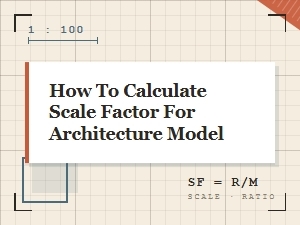 Calculating Scale Factors for Architectural Models
 Applying Scale Factors for Spacecraft Replica Dimensions